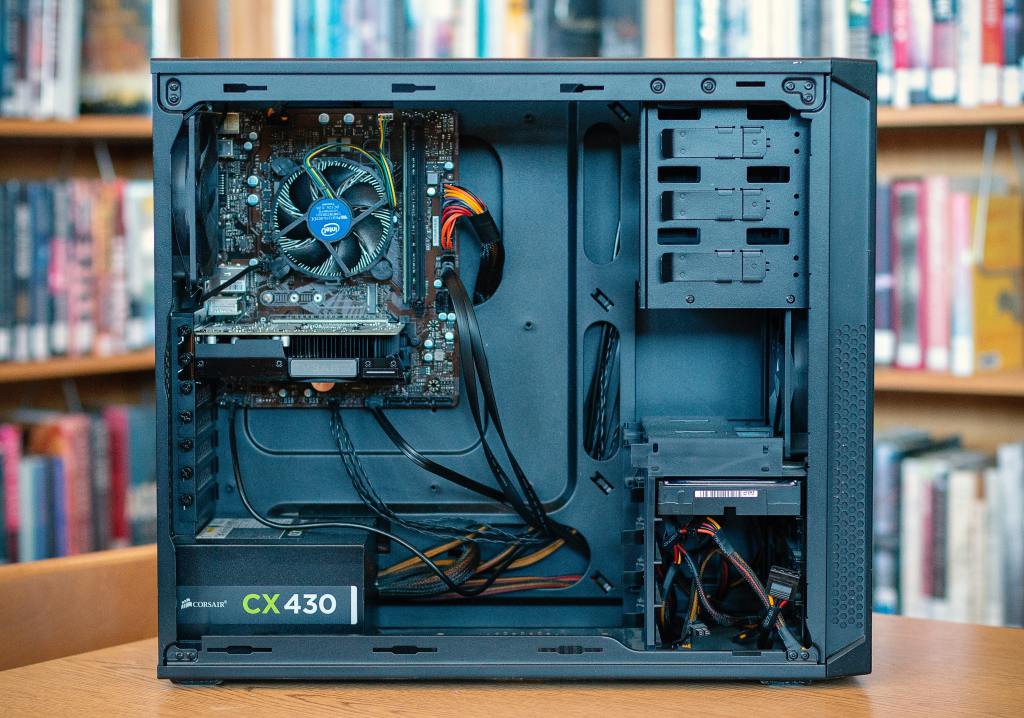
Picking the right ATX motherboard for a gaming PC in 2025 feels more important than ever, because you’re not just building for today—you’re building for future upgrades, faster memory, and higher-speed storage. A lot of gamers make the mistake of picking just any board and suddenly realize they’re bottlenecked or can’t take advantage of newer CPUs, PCIe lanes, or M.2 slots. Whether you’re working with an AMD AM5 socket or Intel’s latest LGA platform, you want a board that balances power delivery, connectivity, and price. After testing and researching, here are five ATX motherboards that really stand out for gaming this year.
One of my top picks is the ASRock X870 Steel Legend WiFi. This board brings strong power delivery and next-gen features without going into overkill territory. With AM5 support, DDR5 memory, and built-in Wi-Fi 7, it’s ready for Ryzen 9000-series CPUs and future upgrades. The VRM design feels solid, and the onboard cooling solutions are well-thought-out so you can push a high-core-count CPU without worrying about stability. For storage, there are multiple M.2 slots that support fast SSDs, which matters when game load times and scratch space are critical. The 2.5 Gb Ethernet is a nice touch too for competitive gaming. What I really like is that ASRock didn’t go too far with flashy RGB—this is a performance-focused motherboard that still looks good in a build, but doesn’t scream “gamer bling.” It’s a dependable option whether you’re building a serious gaming rig now or planning for a CPU upgrade later.
If you’re leaning AMD but want something rugged and durable, the ASUS TUF Gaming X870‑PLUS WiFi is hard to beat. TUF boards are known for their military-grade components, and this one keeps that tradition alive. The AM5 socket combined with DDR5 and a solid 16+2 power phase design means this motherboard can reliably run a Ryzen 7 or 9 even under load. On top of that, having Wi-Fi 7 builtin is a real advantage for gamers who don’t want to run a long Ethernet cable. Storage is very flexible, with M.2 slots easily handling fast NVMe drives, and the PCIe design gives room for a beefy GPU plus expansion cards. Another thing that stands out is the BIOS: ASUS makes it very approachable, so if you want to overclock, adjust fan curves, or tweak memory timings, you’re not going to feel overwhelmed. For a gaming PC that probably won’t be replaced in a year, the TUF X870 is a rock-solid foundation.
For those building on an Intel platform, the ASUS TUF Gaming Z790‑PLUS WiFi is one of the most compelling ATX options. With LGA 1700 support, it’s compatible with modern Intel Core CPUs, and the power delivery is reliable enough for overclocking without instantly frying your VRMs. What’s also great is the cooling: there are well-designed heatsinks over the VRMs and M.2 slots, so even if you’re pushing high frequencies, the board stays cool. The onboard Wi-Fi 6 gives you strong connectivity, and there are plenty of USB ports and PCIe slots for expansion. ASUS also packed in solid audio, which doesn’t matter for everyone—but if you’re building a gaming rig, you appreciate having good onboard sound so you don’t need a separate card. Performance-wise, this board gives you enough headroom to upgrade to future Intel CPUs, making it a solid pick for a long-term build.
If you want something that looks sleek and modern while still being performance-oriented, the MSI Z790 Gaming Plus WiFi is surprisingly powerful for the price. This is an LGA 1700 board too, but MSI has clearly focused on gamers who want extra without paying for the absolute flagship boards. The VRMs are decent, the thermal design is clean, and there’s enough room for multiple M.2 SSDs. The Wi-Fi keeps latency low, and the audio is solid for gaming and streaming. Overclocking is more than just a gimmick—you’ll get real gains if you pair it with a capable CPU. But what really impresses is how MSI balances cost and features here: for someone building a mid-to-high gaming PC, this board doesn’t feel like a compromise. It’s not over-engineered, but it’s not cheap either. It’s the kind of board I’d recommend to someone who wants quality without diving into the 600+ dollar motherboard territory.
On the AMD side again, but with a more budget-friendly yet high-capacity feel, the Gigabyte B650 Eagle AX is a sleeper hit. It supports AM5, DDR5 memory, and has multiple M.2 slots—basically everything you need for a gaming rig that’s going to last. The “Eagle” series from Gigabyte isn’t absurdly flashy, but it gives you excellent build quality, clean layout, and ample power phases to handle a modern gaming CPU. One feature that really matters for future-focused builds is its PCIe support, giving you breathing room for fast NVMe drives or a next-gen GPU. Networking is covered well with Wi-Fi and Ethernet, making it great whether you’re gaming with friends or streaming. Storage cooling is sufficient, and the board layout makes cable management easier than some other ATX boards in this range. For gamers who want a reliable AM5 board today without paying for flagship chips, this Eagle AX is a smart buy.
What ties all these picks together is that they feel like real gaming motherboards in 2025—not just generic boards with “gamer” stickers slapped on. They provide strong power delivery so your CPU doesn’t throttle under load, and they offer plenty of slots for future upgrades. None of them are built just for show; they’re built to be used. And that’s what matters when you’re spending serious money on a gaming PC. A motherboard is like the backbone of your system—get it wrong, and you’ll feel it in performance, stability, or your upgrade options down the line.
One thing that’s become more important than ever is Wi-Fi. Back in the day, gamers would pretty much always run Ethernet because Wi-Fi was too unreliable or slow. But now, with Wi-Fi 6 and even Wi-Fi 7 appearing on ATX boards, you don’t have to sacrifice performance just because your router is across the room. If you value clean setup, fewer cables, or just want to set up your rig in a tight space, picking a motherboard with built-in Wi-Fi is a big deal—and every single board here has it in some form, which is awesome.
Another thing that stands out in 2025 is how scalable the storage has become. M.2 NVMe drives are way more common now, and these motherboards support multiple M.2 slots with proper thermal management. That means you can build a gaming rig that loads ultra-fast for your OS and major games, and also has room for multiple high-speed scratch SSDs or storage drives, without worrying about overheating.
For memory, DDR5 is essentially the standard now on most gaming boards. Each of these motherboards supports DDR5 (some more aggressively than others), which gives you better bandwidth and future compatibility. If you’re building a new PC in 2025, you’re probably going to want to go DDR5 anyway, and these boards deliver that without forcing you into some weird proprietary format.
When it comes to upgrading, these motherboards all offer a decent path forward. Whether you’re planning to move to a newer generation of Ryzen or Intel CPUs, or adding in newer GPUs or ultra-fast storage, you’re not locked in after your first build. That’s the kind of flexibility serious gamers care about—because it’s not just about what you build now, it’s about what your rig can become.
In the end, these five ATX motherboards hit a sweet spot: they support modern CPUs, they include next-gen connectivity, they handle fast storage, and they don’t feel like throwaway parts. For most gamers building in 2025, any of these boards will let you game hard now and upgrade smart later. You don’t always need the flagship-level, ultra-premium board to have a future-proof, powerful gaming PC.
 Niche Tech Space
Leave a comment