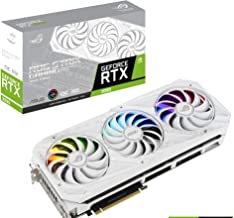
A graphics processing unit, or GPU, is a piece of computer hardware responsible for rendering three-dimensional or two-dimensional computer graphics. It handles how images, animations, and visual effects are displayed on your screen. Whether you’re playing a video game or watching a movie, the GPU ensures the visuals come through clearly and smoothly.
Today, graphics cards are especially popular with gamers who want the best graphics and performance from their favorite online games. Fast frame rates, realistic lighting, high resolutions—all of these rely heavily on a capable graphics card. But GPUs aren’t just for gamers. They have become a critical part of many other areas in tech and computing.
Graphics processors are used for things like cryptocurrency mining, where they help solve complex equations needed to earn digital coins like Bitcoin or Ethereum. They’re also used in machine learning and artificial intelligence, where massive amounts of data need to be processed quickly and efficiently. In those environments, the GPU’s ability to handle parallel tasks makes it an ideal tool.
In most computers, the central processing unit (CPU) and the graphics processor work together. While the CPU is responsible for handling most of the general tasks in a computer system, the GPU focuses on all the visual and graphical tasks. Both are important for a fast and reliable computer, and they need to work together smoothly to give users a seamless experience, especially in tasks that rely heavily on visual output or real-time computation.
What are the Different Types of Graphics Processors?
There are two main types of graphics processors, and understanding them can help when choosing a computer for gaming, work, or creative projects. The most commonly used type is the discrete graphics processing unit. A discrete GPU is a separate piece of hardware that plugs into a PCIe (Peripheral Component Interconnect Express) expansion slot. These slots are found on a computer’s motherboard and are used to install expansion cards like graphics cards, sound cards, and more.
Discrete GPUs are powerful because they come with their own dedicated memory and cooling systems. That means they don’t rely on the computer’s main RAM and can process graphics faster and more efficiently. This is why they’re used in high-performance gaming PCs, video editing workstations, and other setups that require strong graphical performance. If you’ve ever opened up a gaming PC and seen a big, thick card with fans on it, that’s probably the discrete GPU.
The other type is the integrated graphics processor. An integrated GPU is built directly into the computer’s motherboard or more commonly into the CPU itself. These are typically found in laptops and more compact desktops because they take up less space and use less power. While they’re convenient and can handle everyday tasks like watching videos, browsing the web, or doing some light gaming, they don’t offer the same level of performance as discrete GPUs.
Integrated graphics are not optimized for heat control the way discrete ones are. Because they share resources with the rest of the system, they can run into limitations when handling demanding applications. You’ll often see integrated graphics in ultrabooks, budget laptops, or even some gaming laptops where portability is more important than max performance.
Companies like Intel and AMD often include integrated graphics in their CPUs. These allow for out-of-the-box display capability without needing a separate graphics card. Intel’s newer processors often come with Intel UHD or Iris Xe graphics, while AMD has Radeon Vega graphics in many of their APUs. These integrated GPUs are good enough for a lot of tasks and even support some gaming at lower settings.
There are also integrated graphics from Nvidia, though these are less common. Some mobile systems may feature Nvidia technology integrated in unique ways. However, Nvidia is better known for its discrete GPUs, especially in high-end gaming and workstation markets.
Choosing the Right GPU for Your Needs
When picking out a computer or upgrading your system, it helps to know what you actually need from your graphics processor. If you’re mostly working on school assignments, browsing the internet, or streaming videos, integrated graphics will probably be enough. Most modern systems can handle these tasks without a problem, and you’ll save on cost, space, and power.
If you’re into video editing, 3D modeling, CAD work, or any kind of gaming—especially newer titles—then a discrete GPU becomes much more important. Having dedicated hardware to handle high-resolution textures, real-time rendering, and smooth frame rates can make a big difference in how enjoyable or efficient your experience is.
Another thing to consider is future-proofing. Even if you’re not gaming or editing videos now, you might want a system that can handle those tasks later without needing a full replacement. Discrete GPUs offer more flexibility for upgrades and can extend the useful life of a computer system. You can always swap out an older graphics card for a newer one down the line, assuming your system supports it.
How GPUs are Evolving
One of the cool things about graphics processors is how they’re always evolving. Every year, companies like Nvidia, AMD, and Intel release new generations of GPUs that are faster, more power-efficient, and better at handling the latest visual technologies like ray tracing and AI acceleration. Even integrated graphics are improving, with newer chips supporting higher resolutions and better power efficiency than before.
This also means that there’s more choice than ever, especially when it comes to laptops and compact systems. You can now get laptops with discrete GPUs that perform almost as well as their desktop counterparts, while still being thin and portable. And integrated graphics are starting to handle things that used to require a separate card.
Another growing area for GPUs is artificial intelligence. Graphics cards are being used in data centers and research labs to train machine learning models and process big data sets. These tasks benefit from the same parallel processing power that makes GPUs good at rendering video games. As AI continues to grow, GPUs are playing a bigger role outside of gaming and traditional graphics work.
Cryptocurrency mining also continues to use GPUs, although demand has shifted over time based on market conditions and technological changes. While some coins are moving away from GPU mining, others still rely on it, and this can impact the availability and pricing of graphics cards.
Final Thoughts on Graphics Processors
Graphics processors have become one of the most important components in modern computers. Whether it’s for gaming, creative work, scientific computing, or just watching videos, GPUs help deliver a smoother, more visually rich experience. Discrete GPUs offer power and performance, while integrated graphics bring convenience and efficiency.
Both types have their strengths, and the best choice depends on how you use your computer. It’s always a good idea to think about your current needs and what you might want to do in the future. The right GPU can make a big difference in your day-to-day computing experience and keep your system running smoothly for years to come.
 Niche Tech Space